Tribute by Kris Iyer
We are all deeply saddened by the sudden demise of the legendary mrudanga chakravarthy Sri Palghat R. Raghu (Raghu mama to many of us). Several aspects of his life and his art are par extraordinaire. I respectfully pay my humble homage to his departed soul by highlighting a few aspects of this extraordinary artist. These are from my recollections from contributors to this forum and that of Sangeetham, which I gratefully acknowledge.
His life epitomized several lessons that are worthy of learning and emulation whatever may be one’s profession and occupation. He was a karma yogi and a gnana yogi in the true spirit of the word, which enabled him to achieve such greatness and reverence.
As a top-notch, world-renowned artist, Raghu mama carved a distinct niche in the art of mridangam that was characterized by great intelligence, innovation and a burning desire for constant learning and experimentation. Several rasikas, musicians, peers, and sishyas have spoken about his incredible passion for the art. Here are some excerpts:
Sri Chitravina Ravikiran describes in his salutation to Raghu mama, on the occasion of Sangita Kalanidhi award, “that even in the airport before catching a flight, he would be thinking about misra chapu tala” - such was his singular dedication and focus on the art form. Again, most recently in Music Academy, Sri T.N. Seshagopalan describes the brilliance of Raghu mama in describing numerous tala scales in which viribhoni varnam can be sung. Needless to say, Raghu mama was always striving for perfection in the art even after more than 6 decades of being a top-ranked artist!
His accompaniments to all the musicians were of the highest calibre. His knowledge of various compositions was just astounding and he was able to follow the main artist, like a shadow, with great anticipation and superb sangathis. The teermanams and korvais he played were always a classic. His sense of tala, the nadham, the special “thoppi sound”, timing and his anticipation raised the concert to extraordinary heights. It has been often remarked that Raghu mama was the uncrowned king of accompaniment to RTPs. In fact, one such rendition in Calcutta by a senior musician where a pallavi is sung in multiple talas shows his penchant for “kanakku” in mridangam. T. K. Rangachari compliments Raghu mama saying that the new pallavi that TKR had prepared and practiced for weeks was a “piece of cake for Raghu mama on the concert stage”.
He constantly experimented and improvised, displaying his laya mastery in being able to play both “Kuchi” and “Kappi” Mridangams. The late Nobelist Sir C. V. Raman would have been thrilled that the “perfect harmonic instrument” has reached even greater glory at the hands of Raghu mama. His playing style constantly evolved from classic to contemporary musicians easily adapting to the changing styles and tempo. His jugalbandhis with the legendary Alla Rakha on Tabla and Pt. Ravi Shankar are immortal classics.
Raghu mama’s tani avarthanams bore the royal stamp of ingenuity and innovation. The key component of his Tani was the rhythmically patterned structure of the Tani itself. Even to the uninitiated in rhythm and laya, listening to Raghu mama’s tani was always a treat. His tani often appeared to progress methodically like a royal procession or a caravan of Gods being drawn on chariots - simple beginning, a middle gathi of complex rhythms and a final flourish of korvais - all well structured and composed. A classic illustration is the introductory segment in the documentary in “youtube” where the tani’s final phase reverberates enchantingly to the village women pounding rice on stone, a train racing to its destination and a man carrying loads on his shoulder all illustrating that many things in daily life are indeed rhythmic. Incidentally, that segment is drawn from the 1960’s “dhyanam” recording of Sri KVN/Sri VVS and Raghu mama’s Tani, the composition being “Bhajare raghu veeram manasa”. The synchronization and integration of the PMI and PSP styles is illustrated beautifully in that segment. That tani was a constant companion to me in my lonely graduate days of long work hours into late nights in the research lab. That tani had such a therapeutic effect in lessening the stress!
His playing for varnams, krithis and thukadas is again very classy. Who can forget the KVN rendition of Endharo mahanubhavulu, or mokshamu galada in the 1967 MA concert with Raghu Sir -The emotive bhava of KVN was captured so beautifully and precisely by Raghu Mama. Such instances are all too numerous to cite. His accompaniments to Sri Ramanad Krishnan (a most memorable Jamshedpur concert), Sri MDR, Sri GNB, Sri Voleti, Sri Nedunuri, Sri Madura Somu, Sri D. K. Jayaraman and other great vidvans, were marvelous. One should also acknowledge, the greatness of Raghu mama for the ease with which he played in vilambitha kalam compositions sung by Sri MDR, intellectually filling gaps and spaces with highly original rhythmic patterns. “Hariyum Haranum ondre endru” by MDR with Raghu mama is a case in point. He was equally masterful in accompanying Sri Lalgudi Jayaraman, Sri T. N. Krishnan, Sri N. Ramani, Sri Emani Sankara Shastry, Sri Balachander, Sri Ravikiran and Mandolin Srinivas and many other vidvan instrumentalists.
He was an ideal disciple, always having the highest regard for his teachers and constantly seeking their advice even after achieving great recognition and glory. He always appreciated and remembered all his mentors such as the great PMI, GNB, and PSP amongst others and publicly acknowledged, revered and remembered them in many forums including the “gurusmaranam” that he himself started. When asked what was the best award he received in his lifetime of achievements, Raghu mama remarked that he did not seek them but receiving the title of “sangeetha choodamani” from his beloved guru Sri Palghat Mani Iyer was very satisfying!
He was a great teacher always sharing his immense knowledge with students worldwide.
He encouraged them and provided them opportunities to perform. His many illustrious disciples include among others Sri Trichur Narendran, Manoj Siva, Trivandrum Balaji, and the prodigiously talented youngsters Anand Ananthakrishnan and Abhishek Raghuram.
Raghu mama will be sorely missed by the music world. I offer my namaskarams. May his soul rest in peace.


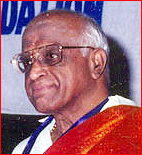 Senior mridangam vidwan Palghat R. Raghu passed away today at 4.45
am. He died of a massive cardiac arrest. He was 81 years old.
Senior mridangam vidwan Palghat R. Raghu passed away today at 4.45
am. He died of a massive cardiac arrest. He was 81 years old.