| ||||
25 Years of Natyanjali |   | |||
|
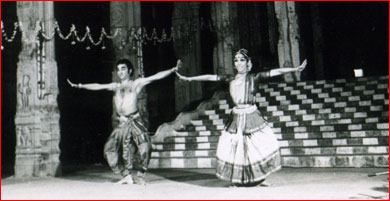
This Sivaratri, Natyanjali, the annual dance festival held inside the famed temple in Chidambaram in Tamil Nadu, dedicated to lord Nataraja, will celebrate its silver jubilee. What began as a simple idea has now grown to become one of the biggest dance festivals of its kind in the world. Every year, more than 300 artistes - classical, folk and martial - perform through the five evenings of this festival. And about 10,000 people sit through the 30-plus recitals performed on a simple masonry stage set in the outer prakaram of this ancient temple, believed to have been first built some 2000 years ago.
The ban on the devadasi system wiped out, all too suddenly, the practice of dance worship inside temples and rendered these artistes completely helpless. Though a number of these devadasis lived out their sunset days in areas around the Chidambaram temple, there was no organised attempt to bring back dance to the temple campus.
Twenty-five years ago, a small group took up the idea mooted by cultural scholar and activist Dr. Kapila Vatsyayan, and held a one-day event. Over the next few years, the dance recitals were increased and were held across two, and then, three days. It was only in 1985 that this dance fest was begun on the day of Sivaratri and ever since, maintained that tradition. The famed 1000-pillared mantap inside the temple was a perfect stage to have the concerts. This space was used frequently in the Thamizh months of Aani and Margazhi, when the deities were taken out in a procession through the mada veethis in the evening and then placed in the mantap for darshan and abhishekam performed early in the morning. The fest organisers simply could not resist using the mantap as the stage and backdrop for the performances. Later, the venue was changed - to a stage set up opposite this mantap, which was fragile and needed to be protected. It was in 1986, that local arts patrons formed the Natyanjali Trust, which since then, has been conducting the dance festival here. The trustees and their well wishers in Chidambaram marshalled their resources and contacts to conduct the Natyanjali, probably the best conducted such event in the region. IAS officer C. K. Gariyali, who was then the local Collector, was a moving force behind the festival. The trusts run by the families of M. A. M. Ramaswamy and A. C. Muthiah also provided help - halls for dining and rest and food to feed the artistes and guests. In 1987, the year when the kumbhabhishekam of the temple was held, the venue of the Natyanjali was shifted once again - to the outer prakaram. Since then, the Natyanjali has grown bigger, with artistes from as far as the north-east of India and Chandigarh, and from countries like Canada, USA, Malaysia and Sri Lanka - performing here. The expenses have risen too. Support has come from the South Zone Cultural Centre based in Thanjavur, a state-run body that supports the arts, the apex Sangeet Natak Akademi, the public sector Neyveli Lignite Corporation and the Annamalai University based in Chidambaram. The Trustees and many other families of Chidambaram chip in with money, food, lodging and transport facilities. "We always end up with a deficit after every festival but we put our personal monies and manage," says Secretary A. Sambandam, a leading advocate. The Trust once drew an ambitious plan for a full-fledged performance arena in the temple campus and was promised funding by an arts body in New Delhi but the plan had to be dropped because the temple, privately-managed by the Dikshitars, was not in favour of it. The Natyanjali though needs more corporate and state support and needs to be widely promoted around the world by the tourism sector. After all, it is as good as the festivals in Khajuraho and Konark. However, it is the passion and dedication with which it is conducted that makes the Natyanjali a unique arts festival in India. | ||||